APAC security buyers start with partners first
Why APAC Security Buyers Still Start with Partners: What Penta Security Should Explain Before the First Demo
In many Asia-Pacific markets, cybersecurity vendors do not win enterprise deals by technical product depth alone. The traditional sales motion engineered in Western software markets, which heavily relies on feature-by-feature demonstrations directly to end-users, frequently stalls when deployed in the APAC region. Across these diverse economies, corporate buyers almost universally look to a trusted local partner before they evaluate the vendor. They require an established regional intermediary who can validate the solution, absorb operational risk, and guarantee long-term maintenance infrastructure. If an incoming security vendor ignores this deep-seated procurement paradigm, the initial product demonstration may receive high praise, yet the actual commercial transaction will inevitably stall in committee.
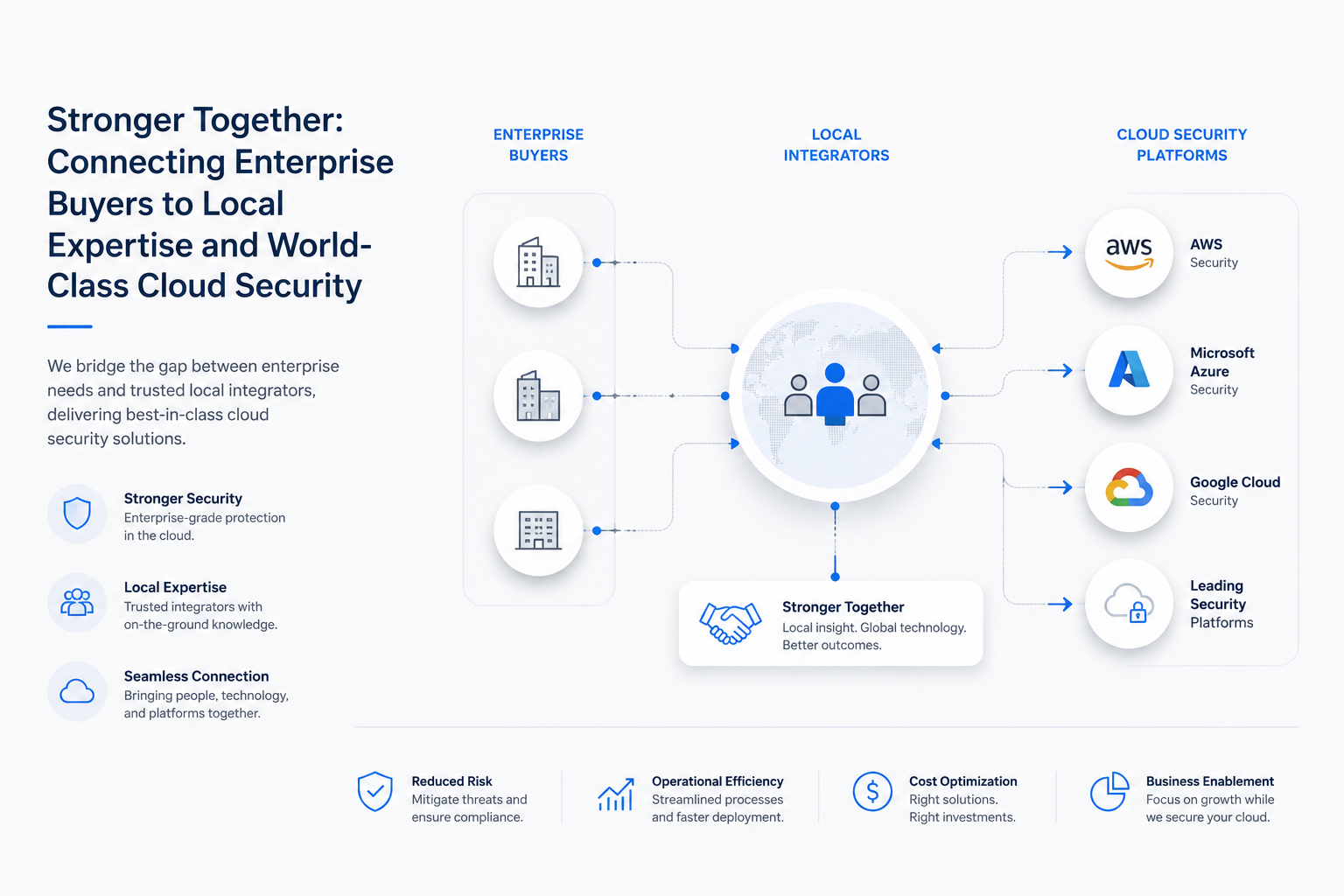
This friction highlights why partner and channel strategy matters just as much as core product positioning. For an enterprise security provider like Penta Security, the critical operational question is not merely what the platform solves in isolation. Instead, the strategic challenge lies in how effectively that technology architecture can be communicated, delivered, and sustained through local systems integrators (SIs), managed security service providers (MSSPs), and value-added resellers (VARs) who already manage the buyer's critical IT infrastructure.
The Architecture of Trust: Three Pre-Demo Questions You Must Answer
To gain meaningful traction within enterprise-grade APAC networks, market entry messaging must proactively address the operational realities of the regional channel ecosystem. High-impact messaging must clarify three fundamental pillars long before the technical demo occurs:
1. Operational Ownership and Lifecycle Leadership
Enterprise buyers in this region are highly averse to fragmented post-sale communication. They need to know immediately who leads the conversation during architecture mapping, implementation, and escalations. Is the vendor expecting the client to interface directly with an overseas engineering group, or is a certified local integrator managing the deployment? Clear boundaries prevent downstream confusion and solidify early-stage buying confidence.
2. Localization of Continuous Support and Incident Response
A security solution is only as reliable as its fastest response window. Buyers evaluate a platform based on what local support looks like after purchase. They require explicit clarity on localized Service Level Agreements (SLAs), time-zone alignment for Tier 1 and Tier 2 engineering assistance, and whether their existing managed service provider will be equipped to handle daily policy tuning and threat mitigation on the vendor's platform.
3. Architectural Adaptability with Existing Infrastructure
Enterprise technology ecosystems throughout the APAC region are frequently characterized by complex, hybrid legacy setups. Decision-makers rarely look to completely replace their foundational network investments to accommodate a new point solution. The messaging must prove why the platform is a safe, frictionless fit for the buyer's current infrastructure stack, certified by the very integrators who built it.

From a conversion optimization perspective, relying strictly on a feature-heavy software demo to win enterprise APAC deals is a fundamentally flawed marketing path. It assumes the buyer's primary hurdle is feature verification. In reality, the true bottleneck is risk mitigation. When marketing materials focus 90% of their real estate on technical specifications and 10% on ecosystem delivery, the conversion funnel breaks at the proposal stage. Security vendors must re-engineer their digital presentation paths to elevate channel enablement to a primary message.
Elevating the Channel from Transactional to Strategic
When these operational answers remain vague, enterprise buyers default to conservative procurement habits. They default to comparing alternative options purely on competitive pricing matrices or global brand familiarity. Conversely, when a vendor explicitly articulates its channel architecture upfront, the entire commercial discussion accelerates. The enterprise buyer can immediately visualize how the software will be successfully provisioned, configured, and integrated into their daily workflows without overloading internal teams.
If enterprise security providers want to achieve sustained traction across these high-growth regional hubs, the next strategic pivot cannot simply be a more refined technical pitch. It must be an integrated partner narrative. By explicitly demonstrating how a solution is delivered, supported, and operationalized by local market experts, a vendor transforms its product from an abstract software application into an enterprise-ready, risk-mitigated business asset.