


What APAC Buyers Must Ask Before Choosing a WAF
The Hidden Cost of Misaligned Security: Why WAF Strategy is an Operations Decision Disguised as Cybersecurity
Consequently, the foundational question during technology procurement should not merely be what specific threats the product blocks in a controlled sandbox. The far more critical question for long-term survival is how much additional operational overhead this solution will generate after the contract is signed. If a cybersecurity vendor cannot answer that inquiry with absolute clarity, the enterprise deployment will usually degenerate into a slow, high-friction mix of policy exceptions, escalated internal communication threads, and emergency tuning sessions that rapidly consume the internal engineering team's limited availability.
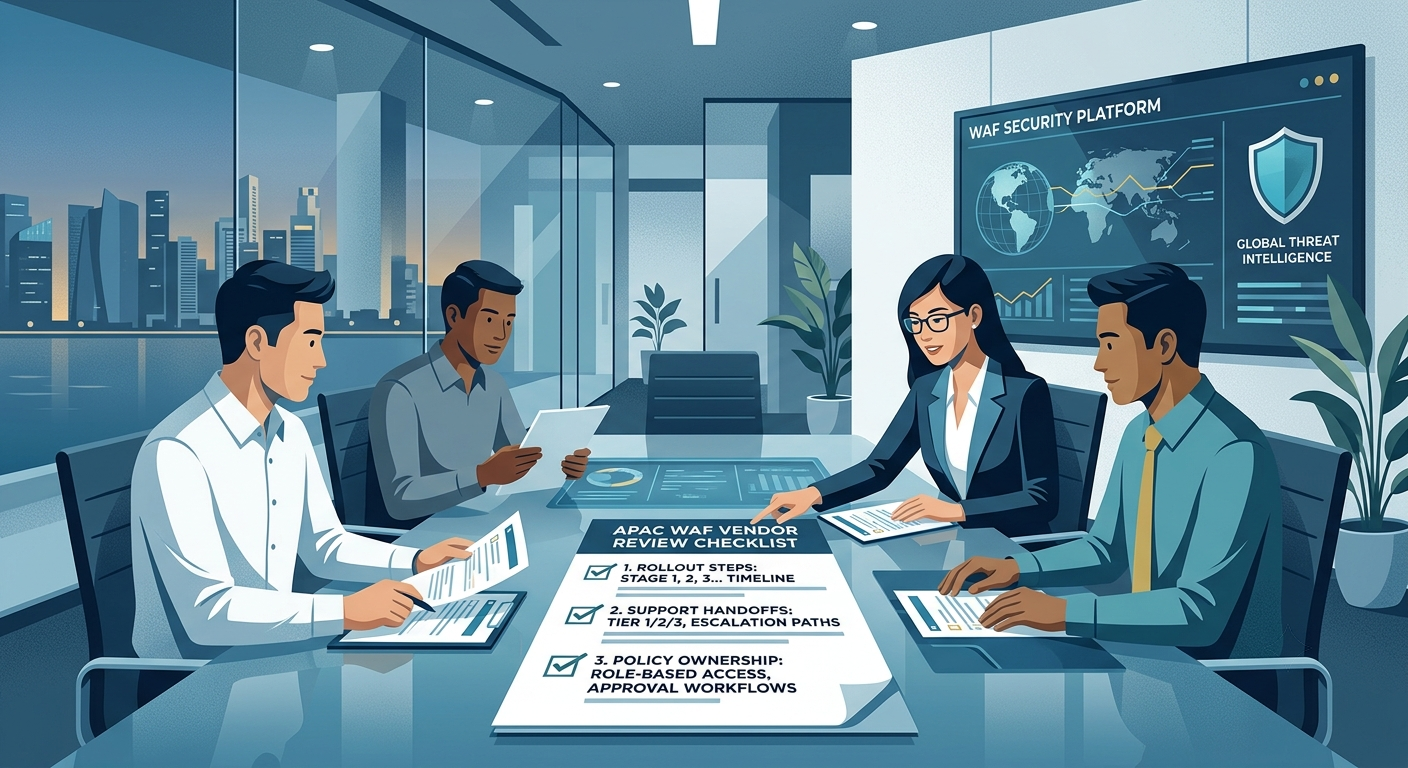
1. Architectural Governance and Policy Ownership Post-Deployment
A significant portion of vendor conversations stop immediately at initial deployment. In contrast, the true operational cost begins immediately after the platform goes live. Someone within the organization must continuously approve rule updates, determine what technical behavior constitutes a true false positive, meticulously review security logs, support rigorous external compliance audits, and seamlessly coordinate with application product owners when an abrupt configuration shift alters live customer transaction traffic.
Asia-Pacific technology teams must explicitly ask a potential vendor whether their underlying policy model is inherently engineered for decentralized, shared ownership across business units, or whether it operates under the archaic assumption that a single, isolated group of highly specialized experts will babysit every single micro-exception. A platform that appears elegantly simplistic within a tailored sales demonstration can rapidly become cost-prohibitive if every minor signature adjustment mandates an internal specialist support ticket or a prolonged change-management window.
This variable carries immensely more strategic weight in multi-market environments than in a single-geography rollout. Regional infrastructure groups frequently support multiple distinct business entities, diverse legal structures, and varied localized data privacy requirements simultaneously. If the vendor's primary operating model does not align with this decentralized reality, the software asset will eventually collect dust on a digital shelf, regardless of how competitive the initial feature matrix appeared on paper.
2. Quantifying the Velocity of the First Meaningful Baselining Period
Enterprise software buyers routinely hear the ambiguous phrase fast deployment throughout the vendor selection cycle, yet this specific sequence of words translates to drastically different technical outcomes depending on the product architecture. Certain legacy vendors use the phrase to indicate that the software is technically installed or provisioned on a server. Premium modern providers use it to specify that the platform is installed, actively tuned to the environment, and producing actionable security decisions without overwhelming the security staff with investigative noise.
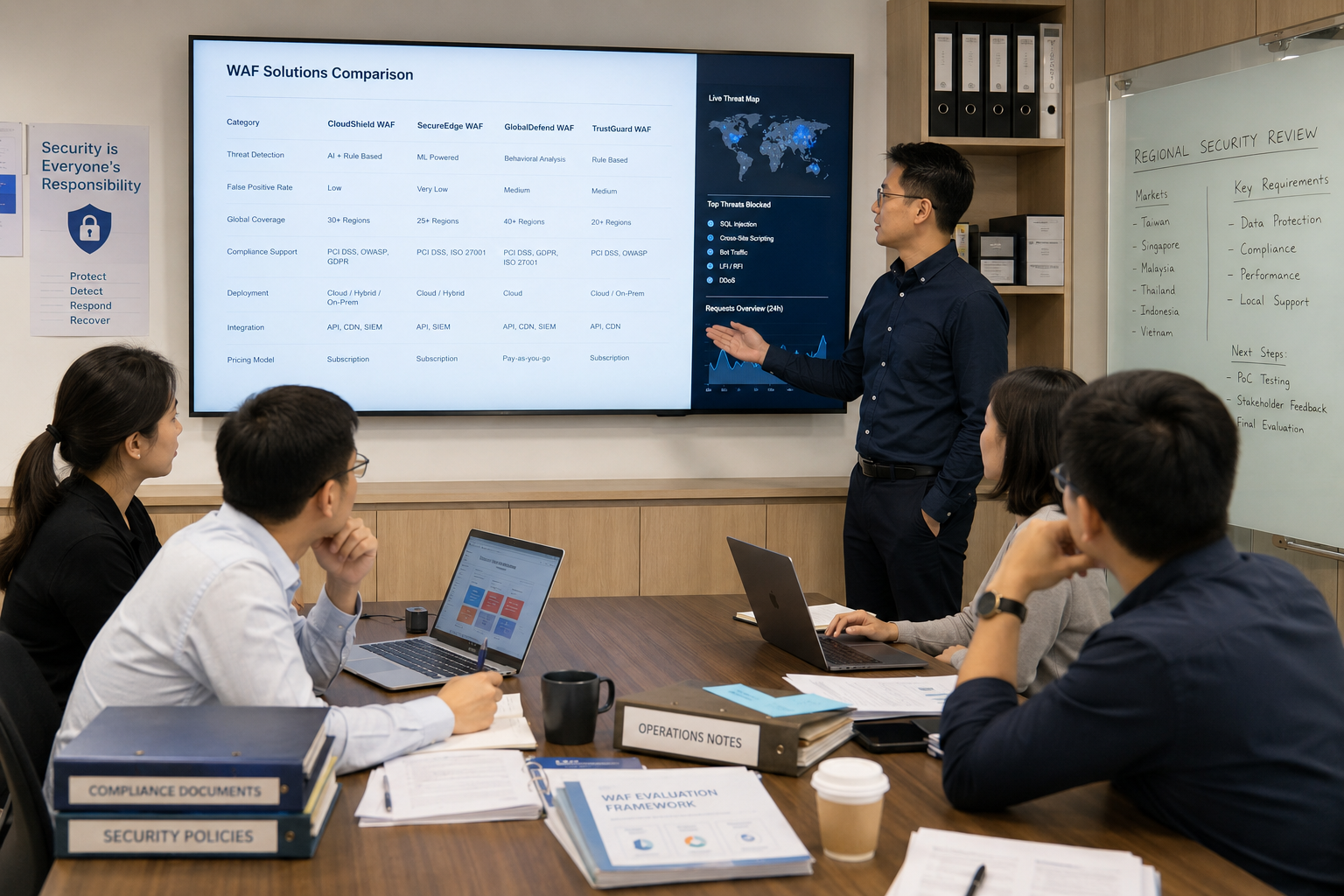
The second definition is the only iteration that carries commercial value for an expanding business. If the initial useful deployment requires weeks of intensive, manual policy cleanup and false-positive filtering, the product has not actually reduced organizational effort. It has merely front-loaded the labor burden earlier into the deployment timeline. Enterprise teams should verify whether the platform natively supports intelligent staged rollouts, reliable out-of-the-box defaults, and a transparent, data-driven tuning trajectory.
3. Technical Support Architecture During Anomalous Traffic Events
The quality and availability of engineering support is not merely a post-sale customer service convenience. It constitutes a foundational element of the overarching corporate security architecture. An unaligned support delivery framework forces the client's internal engineers to become the sole translation layer capable of diagnosing the platform's behavior, which represents an incredibly fragile mechanism for maintaining an essential perimeter defense control.
This risk factor is magnified when regional businesses operate across distinct linguistic contexts, highly variable global time zones, and rigid localized escalation frameworks. A provider whose engineering specialists are only accessible during distant Western operating hours will immediately lose its premium positioning when a critical application launch failure happens late in an Asian business evening or during a highly localized e-commerce traffic peak.
4. Managing Structural and Regional Policy Divergence over Time
Distributed corporate network environments drift at an exceptionally rapid pace. One localized digital team introduces a temporary rule exception to accommodate a specific legacy app. A secondary team copies an older configuration blueprint into a newly launched regional zone. A third engineering group executes an emergency configuration override to sustain a critical customer-facing campaign. Within a brief operational window, the identical security policy exists in multiple fragmented iterations, and no single stakeholder can confidently verify which policy remains the authoritative golden standard.
A mature cloud security vendor must present a structured methodology for maintaining continuous policy alignment. This requirement can be fulfilled through single-pane visibility panels, native version control mechanisms, highly structured change-approval workflows, or a fully managed delivery model that mitigates arbitrary local variance. The underlying technological mechanism is secondary to the operational outcome: can the internal security group ensure absolute uniformity across diverse digital properties without duplicated labor in every single territory? If the answer is negative, every single geographical expansion becomes a dangerous policy fork, and every fork guarantees future remediation debt.
5. Maximizing Business Value Beyond Pure Risk Mitigation
Security procurement leads frequently justify network security investments exclusively through the lens of abstract risk reduction metrics. In stark contrast, commercial business stakeholders within the enterprise ecosystem usually prioritize resource allocation, market continuity, and predictable operating costs to an equal degree. A strategic vendor must possess the capability to articulate what the platform optimizes in concrete business terms.
Does the solution demonstrably decrease ongoing rule optimization time? Does it shorten the launch cycle for new web applications? Does it statistically reduce the incidence of emergency configuration rollbacks? Does it streamline the administrative labor required to prepare for annual compliance audits? Ultimately, does it decrease the total headcount needed to keep the security application operational? These commercial variables determine whether a platform functions as a strategic growth enabler or merely as another static expense line item on a spreadsheet.
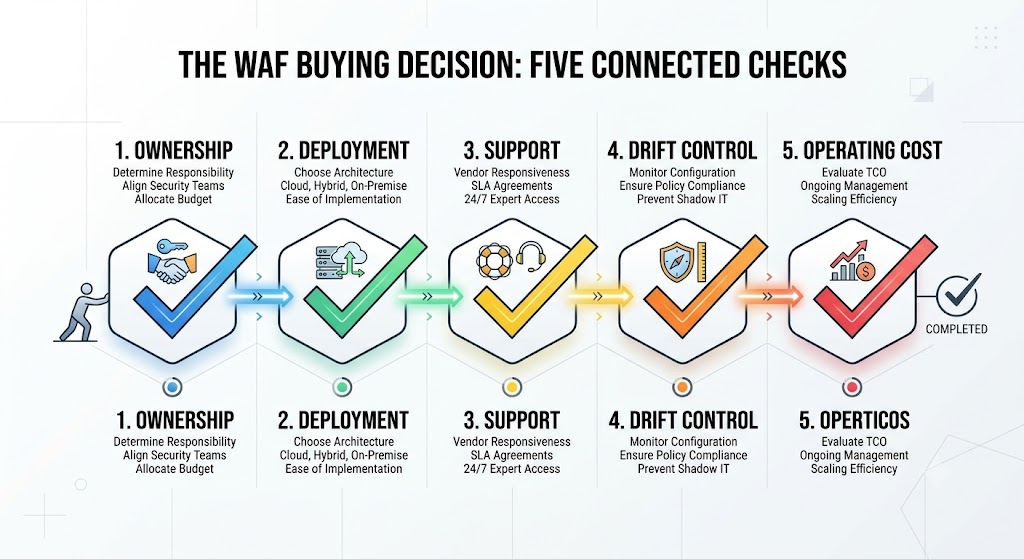
The Enterprise WAF Operational Readiness Framework
Before finalizing a perimeter security vendor, enterprise evaluation committees must establish definitive answers to these five core operational metrics:
The strongest cybersecurity investment is never the option backed by the loudest feature narrative. It is the architecture that aligns with how resource-constrained, multi-market enterprise groups actually operate.
